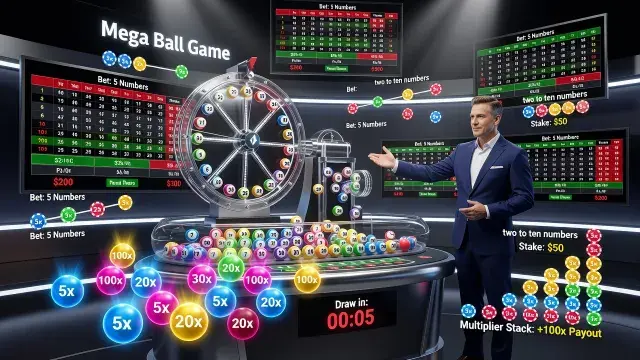
Mega Ball Game: Rules, Mechanics, Gameplay, and Winning Strategy
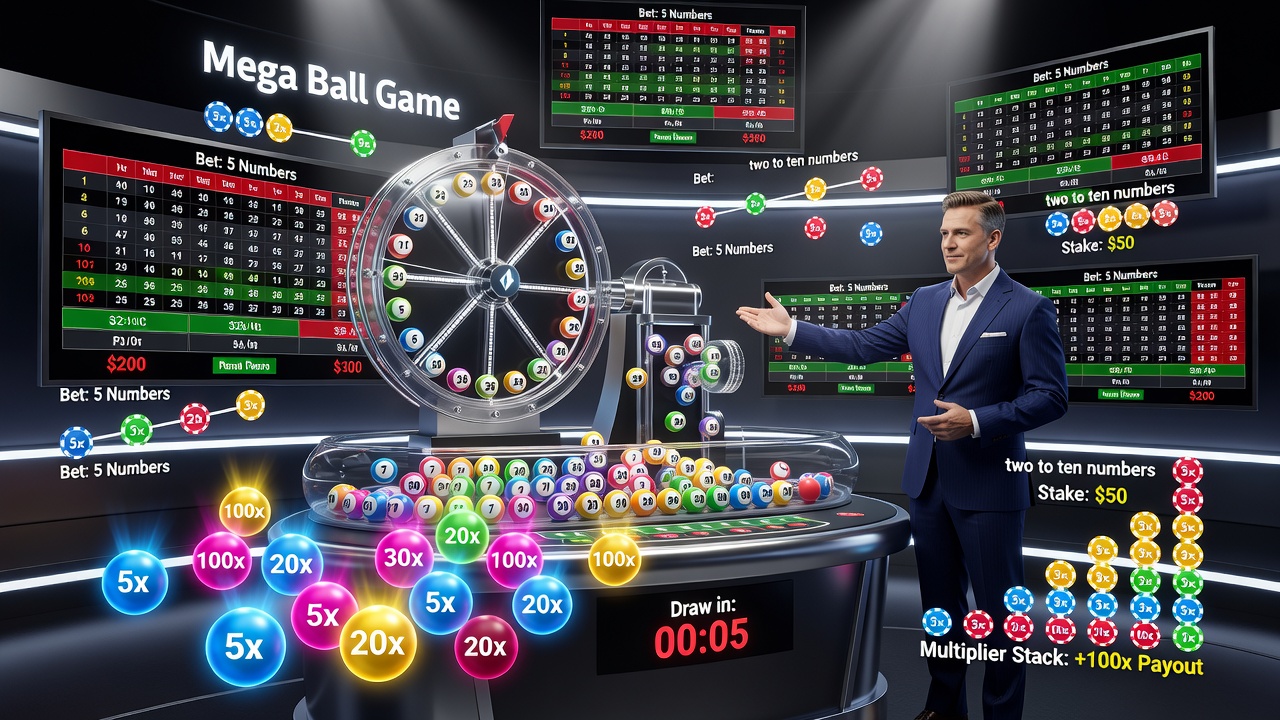
Eighty numbers, one spinning wheel, and a payout multiplier that can climb past a hundred times your stake before the draw even finishes. That combination explains why this particular live-format lottery game has moved from a niche curiosity to a fixture on gaming platforms within a few short years. Unlike traditional draw-based lotteries that resolve once a week, this format compresses the entire experience into a few fast-paced minutes, repeated continuously throughout the day.
What makes the format worth studying isn't luck alone. The scoring structure, the way multipliers stack, and the pacing of each round all follow a fixed logic that rewards players who understand it. For those exploring the format for the first time, the mega ball game offers a clear entry point into how numbers, multipliers, and timing interact to shape outcomes. Once you grasp that interaction, the game stops looking like pure chance and starts looking like a system with identifiable patterns and decision points.
This piece breaks down how the game works from the ground up: the rules that govern each round, the mechanics behind number selection and multiplier assignment, the flow of a typical session, and the strategic choices that separate disciplined players from those who bet on impulse.
What Is the Mega Ball Game?
Origins and Format
The format belongs to a broader category of number-draw entertainment that blends bingo-style number matching with lottery-style payouts. Rather than waiting for a weekly draw, players participate in rounds that run every few minutes, hosted live and broadcast to thousands of participants simultaneously. The pacing owes more to fast-paced casino games than to traditional lottery draws, which is part of its appeal.
Why It Differs From Traditional Lottery Draws
Traditional lotteries separate the purchase of a ticket from the draw by days or weeks. This format collapses that gap entirely. Players select numbers, a host draws balls in real time, and multipliers are revealed before the numbers are called - a structural difference that changes how players approach risk and timing.
Where the Game Is Typically Played
The format is almost exclusively available through live-dealer platforms and online gaming operators, streamed from dedicated studios. Physical retail versions exist in some markets, but the live, digital version dominates player numbers because of its speed and accessibility.
Ball Game Mechanics Explained
The Number Pool and Draw Process
Each round draws a fixed set of numbers from a larger pool, commonly ranging from 1 to 80. A machine, visible to players during the live stream, physically selects the balls one at a time until the required count is reached. Transparency in the draw process is central to the mechanics - nothing happens off-screen.
Multiplier Balls and Their Role
Before the main draw, a separate set of multiplier balls is revealed, each attached to a random number and a multiplier value that can range from small boosts to substantial payout increases. If a multiplier ball's number later appears in the main draw, every win connected to that number receives the multiplier applied automatically.
How Payouts Are Calculated
Payouts depend on how many numbers a player matches relative to how many they originally selected, cross-referenced against a fixed payout table. The multiplier balls then apply on top of that base payout, which is why two players matching the same numbers can walk away with very different returns depending on which multiplier numbers were drawn.
- Base payout: determined by the count of matched numbers against selections
- Multiplier layer: applied only if a matching number carries a multiplier
- Final payout: base payout multiplied by any active multiplier value
Mega Ball Rules Every Player Should Know
Selecting Numbers Before the Round
Players typically choose between two and ten numbers from the available pool before the round begins. The rules require this selection to close before the multiplier balls are revealed, which prevents any strategic adjustment based on multiplier positions - an intentional design choice that keeps the format fair.
Timing Windows and Round Cutoffs
Every round operates on a strict timer. Betting windows close a set number of seconds before the draw starts, and no late entries are accepted. Missing the cutoff means waiting for the next round, so players who want to participate need to track the countdown closely.
Minimum and Maximum Bet Structures
Betting limits vary by operator, but the format generally accommodates both small, casual wagers and higher-stakes play within the same round. This flexibility is part of what has broadened its audience beyond dedicated lottery players.
Mega Ball Gameplay: A Step-by-Step Walkthrough
Placing Your Bet
The round opens with a betting interface showing the full number pool. Players click or tap their chosen numbers, confirm their stake, and submit before the timer expires. Some platforms allow saved number sets for players who prefer consistency across rounds.
Watching the Draw Unfold
Once betting closes, the multiplier balls are revealed first, followed by the main draw sequence. The host calls each number as it's drawn, and the interface highlights matches in real time, giving players immediate visual feedback on how their bet is performing.
Reading the Results Screen
After the final ball is drawn, the results screen displays matched numbers, the base payout tier reached, and any multiplier applied. Winnings are credited automatically, and the next round's betting window typically opens within a minute.
Mega Ball Strategy: Playing Smarter, Not Just Luckier
Number Selection Approaches
Some players spread their selections evenly across the number pool, betting on the statistical likelihood that draws distribute roughly across the full range over time. Others cluster numbers around ranges they consider historically active. Neither approach guarantees results, but understanding the probability distribution behind the draw helps players set realistic expectations rather than chasing patterns that don't exist.
Managing Multiplier Risk
Because multipliers apply randomly and are revealed before the main draw, players can't influence which numbers carry a boost. What they can control is how much they wager relative to the multiplier environment for that round - some players increase stakes slightly when high-value multipliers are visible, accepting that this is a preference rather than a guaranteed edge.
Bankroll Discipline Across Multiple Rounds
Given how quickly rounds repeat, bankroll management matters more here than in slower lottery formats. Setting a fixed session budget and a stopping point - whether a win threshold or a loss limit - prevents the rapid pace from encouraging impulsive re-betting.
Reading Payout Tables Before Playing
Every operator publishes a payout table showing exact returns for each match count and number-selection size. Reviewing this table before playing, rather than during a live round, lets players choose selection sizes that align with their risk tolerance instead of guessing under time pressure.
Common Mistakes Players Make
Ignoring the Payout Table
New players often select numbers without checking how payout tiers scale, then feel confused when a partial match returns far less than expected. The table is fixed and public - there's no reason to play blind.
Chasing Multiplier Numbers
Because multiplier balls are drawn before the main sequence, some players mistakenly believe they can adjust strategy in response. Bets are already locked by that point, so any perceived adjustment is an illusion rather than a real strategic move.
Overcommitting Bankroll to a Single Session
The rapid round pace makes it easy to play far more rounds in an hour than a traditional lottery would allow in a month. Without a predefined limit, session losses can accumulate quickly.
Frequently Asked Questions
How many numbers are typically drawn in a single round?
Most versions draw twenty numbers from a pool of eighty during the main sequence, though exact figures can vary slightly between operators. Players should always check the specific rules of the platform they're using before placing a bet.
Can I change my selected numbers after the round starts?
No. Once the betting window closes, number selections are locked and cannot be modified, cancelled, or reselected for that round. Any changes must wait until the next round's betting window opens.
Do multiplier balls affect every player in the round?
Yes. If a multiplier ball's number is later drawn in the main sequence, the multiplier applies to any player whose selection included that number, regardless of stake size. The multiplier value is fixed per round and visible before the main draw begins.
Is there a strategy that guarantees consistent wins?
No selection method changes the underlying probability of the draw, since each number carries equal odds of being drawn. Strategy in this context focuses on bankroll management, payout awareness, and selection consistency rather than prediction.
How long does a typical round last from start to finish?
Including the betting window, multiplier reveal, and main draw, a full round usually completes in under five minutes. This pace allows for dozens of rounds per hour, which is part of the format's appeal for players who prefer fast turnover.
What happens if I don't match any numbers?
No match means no payout for that round, and any multiplier revealed has no effect on your result since it only applies to numbers you've selected. Your stake for that round is simply not returned, consistent with standard lottery-style mechanics.